
What is your land worth if the house were not there?
A traditional valuation estimates what a homeowner may pay for your house today. Verdi helps owners of older homes on larger lots understand the second question: what qualified builders may support for the land—using local sales, new-construction activity, and property-specific review.
Private · No obligation · Not an offer or appraisal · Designed to share with family and counsel
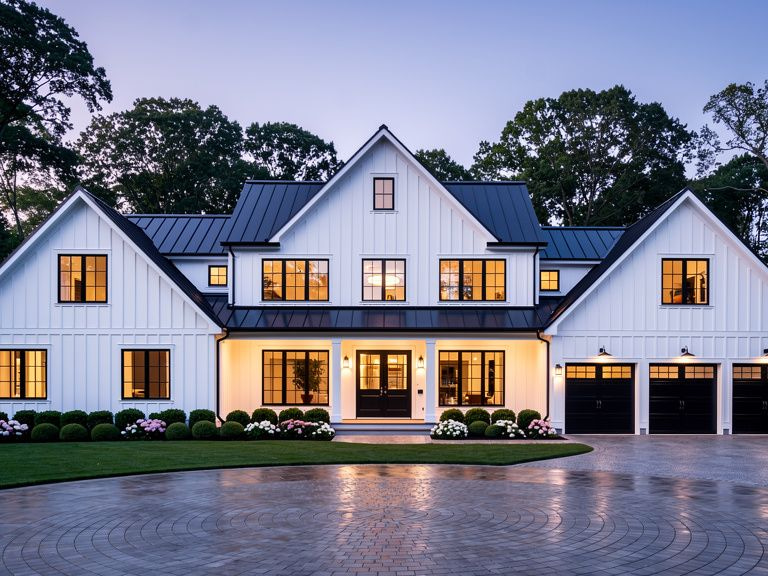
The right answer is different for every property. Sometimes listing wins. We say so.
- A land-value range with the comparable sales shown, so you can check the work
- Your land number laid beside a traditional listing, net of commissions and credits
- Newton · Weston · Wellesley · Lexington · Needham
- When listing nets you more, we say so plainly
Your home’s value depends on who’s buying.
Most sellers assume the open market sets the price. For teardown and redevelopment-worthy properties, that assumption is often wrong.
A retail buyer values what’s on the lot. A builder values what could be built on it. For the right property — an older home on a large lot in a premium Massachusetts market — those numbers can be significantly different.
What almost nobody will tell you is the second number: what a builder would specifically pay for your dirt. That is the number we establish, and we show you the comparable sales it rests on so you can check the arithmetic.
Your property can be valuable in two different ways.
A homeowner sees the house as it stands today. A builder may see the lot, the location, and what a new home could become.
The CMA is not wrong. It answers one question: What does a homeowner pay for this house as it sits? Verdi runs the second question: What is my land worth as if the house were not there?
This is an automated estimate based on available property and market data. It is not an appraisal, listing-price recommendation, or offer to purchase.
More than the house: what surrounds your address.
A home's value is not only determined by the structure. Schools, parks, transit access, and everyday convenience shape how homeowners experience a location — and how the retail market sees it. Your report includes the schools, parks and transit recorded near your address, alongside the builder-side facts about the lot itself.
- Schools connected to this address
- Parks and outdoor spaces nearby
- Transit and connectivity nearby
- Local context around your property
Local information is presented as factual reference only. It is not a rating, ranking, school endorsement, or safety score, and availability varies by address.
Same parcel, two futures.
Sell the land to a builder
You see the gross, the timeline, and the certainty. No showings, no staging, no repair credits extracted from a house with original systems, no post-inspection price cut, and you choose the closing date. The number is based on what the land supports once built — not on what the structure appraises for today.
List it traditionally
The likely sale price, minus roughly 5% in commissions, minus buyer concessions, minus the repair credits a buyer will extract, minus 60 to 90 days of strangers in your home. Net to you at the bottom. When that column wins, we say so — without a paragraph explaining why you should still consider us.
Same parcel, two futures, laid out honestly. If a property has exceptional potential we can also structure a joint venture where you keep a share of the development profit rather than selling it away — but that is a conversation, not a menu item.
The specific property we’re looking for.
Verdi is built around a specific kind of property. Yours likely qualifies if:
- Your home was built before 1980
- Your lot is 0.75 acres or larger
- You are in Newton, Weston, Wellesley, Lexington or Needham
- A builder would value the land more than a retail buyer values the existing house
- You want to know the land number before you decide anything — not after
If that describes your property, the land number is worth knowing — whether or not you ever intend to sell.
How the math works in practice.
That gap between the two columns is the entire reason this exists. It is also the number an owner is least likely to be shown, because the person who knows it is usually the person buying.
We do not make money on your discount. We make money by building well on land that supports it — which is why we can tell you the real number and still be in business.
Illustrative example. Actual figures depend on the specific property, lot, and market conditions.
From your address to the land number — three steps.
Start with your address.
We pull the lot size, the assessed value and the recorded sales around you. Nothing for you to fill in.
We establish the land number.
Comparable land sales within a half mile, what builders paid, and what those lots supported once built.
You see both futures, side by side.
Selling the land against listing traditionally — real numbers, real timelines, and the net to you at the bottom of each column.
When listing nets you more, we will tell you so.
If the honest math says you net more by listing your home on the open market, the analysis will say that plainly — with no hedging and no paragraph explaining why you should still consider us. We would rather lose a transaction we were going to lose anyway than have you find out later that the numbers were arranged in our favor.
Find out what your land is actually worth.
Start with the address. You will see the lot, the comparable land sales within a half mile, and an estimated land-value range — a range, not an offer, with the comparables shown so you can check the work. Nothing is asked of you in return.
Serving Newton · Weston · Wellesley · Lexington · Needham — verdioffers.com